Cardiac Angioplasty: A Modern Approach to the Treatment of Coronary Artery Blockage
Coronary artery disease is one of the leading causes of death worldwide. It occurs due to narrowing or blockage of the arteries that supply blood to the heart muscle, and if not treated in time, it may lead to heart attack, heart failure, and even death. Cardiac angioplasty (Percutaneous Coronary Intervention - PCI) is one of the most important achievements of modern medicine that restores natural blood flow to the heart muscle by opening narrowed or blocked arteries. Today, this method has become an alternative to open-heart surgery in many patients and plays an important role in reducing mortality, shortening hospital stay, and improving quality of life.
The heart requires sufficient blood and oxygen to function properly. These are delivered to the heart muscle through the coronary arteries. Over time, accumulation of fat, cholesterol, and inflammatory substances in the vessel walls leads to the formation of atherosclerotic plaques. These plaques gradually reduce the inner diameter of the arteries and disrupt blood flow.
In the past, most of these patients were treated only with Coronary Artery Bypass Grafting (CABG). However, today angioplasty is considered one of the most effective treatment methods that allows opening of heart arteries without open-heart surgery.
What Is Cardiac Angioplasty?
Cardiac angioplasty or PCI is a minimally invasive therapeutic procedure used to open narrowed or blocked coronary arteries. In this method, after angiography, the doctor guides a small balloon through a catheter to the site of blockage. When the balloon is inflated, the atherosclerotic plaque is pushed against the vessel wall and blood flow is restored.
In most cases, a stent is placed after the procedure to keep the artery open and reduce the risk of re-narrowing.
Indications for Angioplasty
Angioplasty is usually recommended in the following conditions:
- Acute myocardial infarction (especially STEMI)
- Chest pain due to reduced blood supply that is not controlled with medication
- Severe narrowing of one or more coronary arteries
- Abnormal exercise test results showing signs of cardiac ischemia
- Re-narrowing of an artery after previous treatment
Procedure Steps
This procedure is performed in a cardiac catheterization laboratory and usually includes the following steps:
- Local anesthesia at the wrist or groin area
- Insertion of a catheter into the artery
- Guiding the catheter to the blockage using imaging
- Passing a guidewire through the narrowed area
- Inflating a balloon at the site of blockage
- Placing a stent to keep the artery open
- Final assessment of blood flow and removal of the catheter
In most patients, this procedure takes 30 to 90 minutes.
Types of Stents
Today, two main types of stents are used.
Bare Metal Stent (BMS):
A metallic structure that is mostly used in selected cases.
Drug-Eluting Stent (DES):
A drug-coated stent that prevents excessive tissue growth inside the artery and significantly reduces the risk of re-narrowing. Today, this type is preferred in most patients.
Advantages of Angioplasty
Angioplasty has several important advantages compared to other treatment methods:
- Rapid restoration of blood flow to the heart muscle
- Reduction of heart muscle damage during acute attacks
- Relief of chest pain and improvement of physical capacity
- Reduced need for open-heart surgery in many patients
- Short hospital stay
- Faster return to daily activities
- Improved quality of life and reduced cardiac complications
Potential Risks and Complications
Although angioplasty is considered a relatively safe procedure, it may still have some complications:
- Bleeding at the catheter insertion site
- Allergic reaction to contrast material
- Temporary kidney impairment
- Blood clot formation inside the stent
- Restenosis (re-narrowing of the artery)
- Irregular heart rhythm
- In rare cases, heart attack, stroke, or arterial rupture
Post-Angioplasty Care
Long-term success depends not only on a successful procedure but also on patient cooperation.
After angioplasty, patients should:
- Take antiplatelet drugs such as aspirin and a second medication as prescribed
- Regularly control blood pressure, blood sugar, and cholesterol
- Avoid smoking and tobacco products
- Follow a healthy, low-fat diet
- Gradually start physical activity as advised by the doctor
- Continue regular cardiac follow-ups
Beyond Treatment: Lifestyle Modification Is the Key to Success
Angioplasty removes the blockage, but it does not eliminate the root cause of the disease. If patients continue smoking, unhealthy diet, inactivity, and other risk factors, new blockages may develop in the same or other coronary arteries.
Therefore, the real success of angioplasty depends on lifestyle modification. A healthy diet, regular exercise, control of blood pressure, sugar, and cholesterol, and regular use of medications play a key role in preventing recurrence and maintaining heart health.
Conclusion
Cardiac angioplasty is one of the greatest advances in interventional cardiology in recent decades. This method improves blood flow to the heart muscle by opening narrowed or blocked arteries and reduces the risk of heart attack, heart failure, and death in many patients.
However, it gives the best results when combined with lifestyle modification, risk factor control, and regular medical follow-up. In fact, the best treatment is successful only when the patient actively participates in maintaining their own health.
Scientific References
- Braunwald’s Heart Disease: A Textbook of Cardiovascular Medicine, 12th Edition.
- Harrison’s Principles of Internal Medicine, 21st Edition.
- 2025 ACC/AHA Guidelines for the Management of Coronary Artery Disease.
- 2024 European Society of Cardiology (ESC) Guidelines on Chronic Coronary Syndromes.
- World Health Organization (WHO): Cardiovascular Diseases.
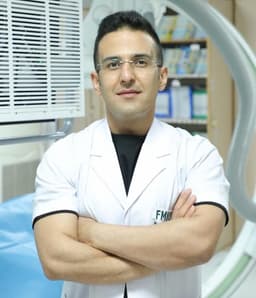
Compassionate heart care guided by expertise, experience, and a patient-centered approach.
Dr. Mohibullah Ahmadzai is a cardiology specialist with experience in angiography, angioplasty, echocardiography, stress testing, and Holter monitoring at FMIC and Abar Clinic in Kabul.